
 Image 1 of 1
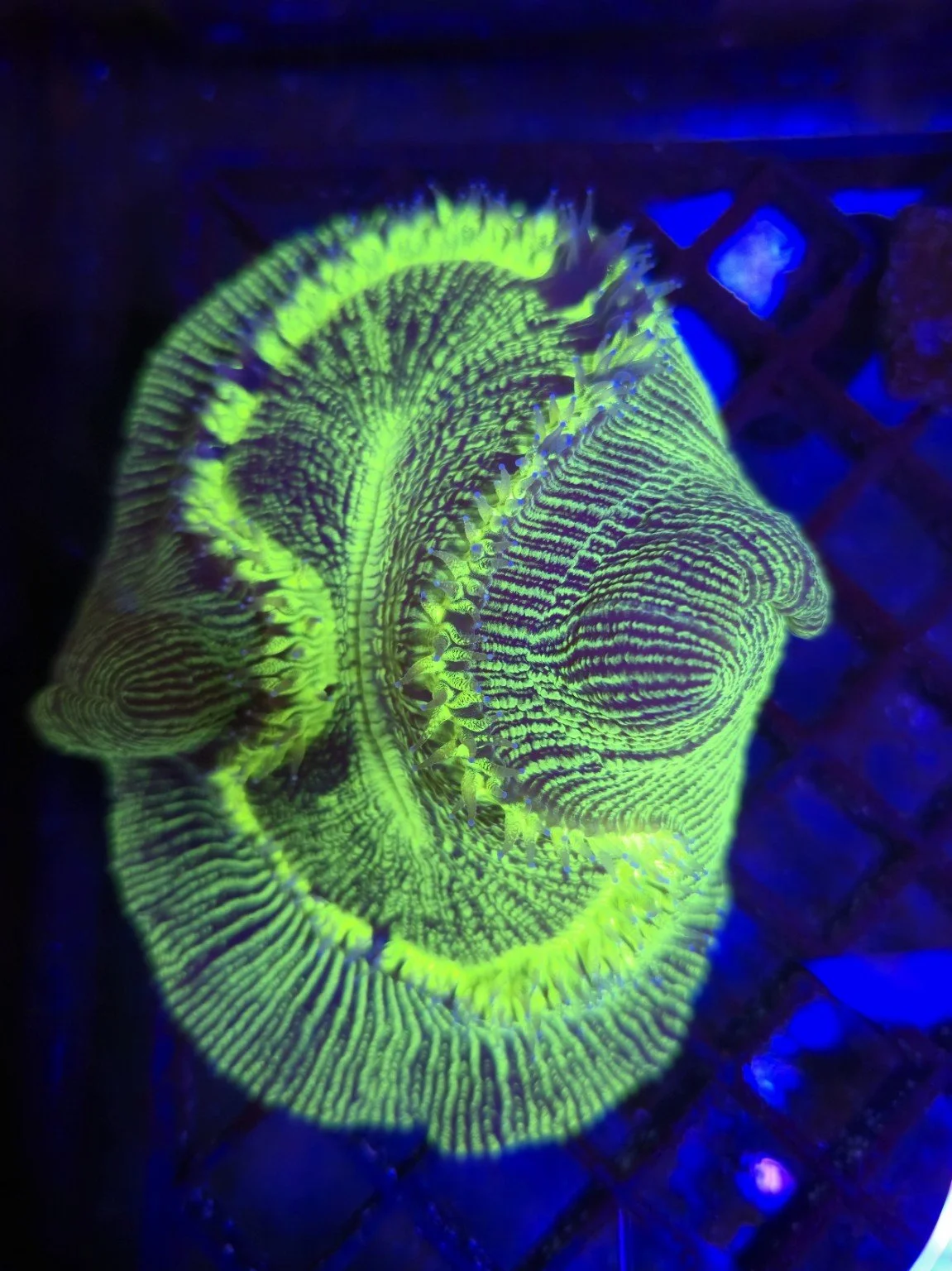
The Pinwheel Trachyphyllia is a spectacular open brain coral with an unmistakable pattern. Intense fluorescent green tissue is broken up by intricate dark radial striping, producing the swirling “pinwheel” appearance that gives this variety its name.
Under blue reef lighting, the green becomes exceptionally bright while the contrasting lines highlight every fold and ridge of the coral. When fully expanded, its large fleshy structure makes an impressive feature piece on the sand bed.
Recommended Tank Parameters
Temperature: 24–26°C
Salinity: 1.025–1.026 SG
Alkalinity: 7.5–9.0 dKH
Calcium: 400–450 ppm
Magnesium: 1250–1400 ppm
Nitrate: 2–15 ppm
Phosphate: 0.03–0.10 ppm
Lighting: Low to moderate, approximately 50–120 PAR
Flow: Low, gentle and indirect
Placement: Sand bed
Care Level: Easy–Moderate
Temperament: Semi-aggressive
Trachyphyllia are best positioned on a soft sand bed where their fleshy tissue can expand without rubbing against sharp rockwork. Gentle water movement is ideal; excessive direct flow can prevent full inflation and potentially damage the delicate tissue.
Leave enough room around the coral for it to expand considerably beyond its skeleton, particularly when fully settled.
The Pinwheel Trachyphyllia is a spectacular open brain coral with an unmistakable pattern. Intense fluorescent green tissue is broken up by intricate dark radial striping, producing the swirling “pinwheel” appearance that gives this variety its name.
Under blue reef lighting, the green becomes exceptionally bright while the contrasting lines highlight every fold and ridge of the coral. When fully expanded, its large fleshy structure makes an impressive feature piece on the sand bed.
Recommended Tank Parameters
Temperature: 24–26°C
Salinity: 1.025–1.026 SG
Alkalinity: 7.5–9.0 dKH
Calcium: 400–450 ppm
Magnesium: 1250–1400 ppm
Nitrate: 2–15 ppm
Phosphate: 0.03–0.10 ppm
Lighting: Low to moderate, approximately 50–120 PAR
Flow: Low, gentle and indirect
Placement: Sand bed
Care Level: Easy–Moderate
Temperament: Semi-aggressive
Trachyphyllia are best positioned on a soft sand bed where their fleshy tissue can expand without rubbing against sharp rockwork. Gentle water movement is ideal; excessive direct flow can prevent full inflation and potentially damage the delicate tissue.
Leave enough room around the coral for it to expand considerably beyond its skeleton, particularly when fully settled.